
Elections
May 2027
Become a Weston-super-Mare Town Councillor
Become a Weston-super-Mare Town Councillor
Being a Weston-super-Mare Town Councillor is an opportunity to play an active role in the future of Weston-super-Mare and to represent the people who live in your ward.
Councillors work together
Community representatives
Using your experience
Criteria for Becoming a Councillor:
You must be at least 18 years old and be a British citizen, an eligible Commonwealth citizen or a citizen of any other member state of the European Union and meet at least one of the following four qualifications:
- You are registered as a local government elector for the parish in which you wish to stand, from the day of your nomination onwards.
- You have occupied as owner or tenant any land or other premises in the parish during the whole of the 12 months before the day of your nomination and the day of election.
- Your main or only place of work during the 12 months prior to the day of your nomination and the day of election has been in the parish.
- You have lived in the parish or within three miles of it during the whole of the 12 months before the day of your nomination and the day of election.
To stand for any registered political party, you need to go through the party first as the party has to certify you to the electoral office.
To stand as an independent councillor you need to directly contact the Electoral Office at North Somerset Council.
So, which Council has what role during the election?
8 Play Areas
North Somerset Council → Runs and administers the election
Weston-super-Mare Town Council → Provides information about the Town Council and becoming a Weston-super-Mare Town Councillor
Electoral Commission → Provides guidance, sets standards and oversees the electoral framework
Weston-super-Mare Town Council is entirely independent from North Somerset Council and raises its own budget to provide the services, facilities, and community initiatives that matter most to the people of Weston-super-Mare.
The Town Council also acts as a consultee and strong advocate on behalf of local residents, working closely with North Somerset Council on a range of projects and services where collaboration is beneficial.
Representing and promoting the needs, priorities, and aspirations of the local community is at the heart of everything we do.
Weston-super-Mare Town Council Clarity of Role
Weston-super-Mare Town Council provides services including:
- Weston Museum
- Old Town Quarry
- Fridge of Free Stuff
- Visitor Information Centre
- Water Adventure Play Park
- Milton Road Cemetery
Select noticeboards, public toilets, play areas and open spaces, bus shelters and public/dog waste bins.
Starting from May 2027 Weston-super-Mare Town Council will have 29 councillors elected every 4 years subject to future community governance reviews, as well as a small number of employed staff to implement their decisions.
North Somerset Council Clarity of Role
North Somerset Council provides a full range of local government services including:
- Council tax billing
- Libraries
- Social services
- Housing
- Processing planning applications
- Leisure centres and sport
- Highways including parking
- Education
- Waste collection and disposal
North Somerset Council has 50 councillors being elected at each election. Some of these councillors are dual-hatted and are on both North Somerset and Weston-super-Mare Town Council.
Become a Weston-super-Mare Town Councillor
Become a Weston-super-Mare Town Councillor
Being a Weston-super-Mare Town Councillor is an opportunity to play an active role in the future of Weston-super-Mare and to represent the people who live in your ward.
Councillors work together
At Weston-super-Mare Town Council, Councillors work together to make decisions about the services, facilities and activities that the Town Council is responsible for, while also listening to residents and working with community organisations, businesses, partners and other local authorities.
Community representatives
Using your experience
Criteria for Becoming a Councillor:
You must be at least 18 years old and be a British citizen, an eligible Commonwealth citizen or a citizen of any other member state of the European Union and meet at least one of the following four qualifications:
- You are registered as a local government elector for the parish in which you wish to stand, from the day of your nomination onwards.
- You have occupied as owner or tenant any land or other premises in the parish during the whole of the 12 months before the day of your nomination and the day of election.
- Your main or only place of work during the 12 months prior to the day of your nomination and the day of election has been in the parish.
- You have lived in the parish or within three miles of it during the whole of the 12 months before the day of your nomination and the day of election.
To stand for any registered political party, you need to go through the party first as the party has to certify you to the electoral office.
To stand as an independent councillor you need to directly contact the Electoral Office at North Somerset Council.
So, which Council has what role during the election?
So, which Council has what role during the election?
North Somerset Council → Runs and administers the election
Weston-super-Mare Town Council → Provides information about the Town Council and becoming a Weston-super-Mare Town Councillor
Electoral Commission → Provides guidance, sets standards and oversees the electoral framework
Weston-super-Mare Town Council is entirely independent from North Somerset Council and raises its own budget to provide the services, facilities, and community initiatives that matter most to the people of Weston-super-Mare.
The Town Council also acts as a consultee and strong advocate on behalf of local residents, working closely with North Somerset Council on a range of projects and services where collaboration is beneficial.
Representing and promoting the needs, priorities, and aspirations of the local community is at the heart of everything we do.
Weston-super-Mare Town Council Clarity of Role
Weston-super-Mare Town Council provides services including:
- Weston Museum
- Old Town Quarry
- Fridge of Free Stuff
- Visitor Information Centre
- Water Adventure Play Park
- Milton Road Cemetery
Select noticeboards, public toilets, play areas and open spaces, bus shelters and public/dog waste bins.
Starting from May 2027 Weston-super-Mare Town Council will have 29 councillors elected every 4 years subject to future community governance reviews, as well as a small number of employed staff to implement their decisions.
North Somerset Council Clarity of Role
North Somerset Council provides a full range of local government services including:
- Council tax billing
- Libraries
- Social services
- Housing
- Processing planning applications
- Leisure centres and sport
- Highways including parking
- Education
- Waste collection and disposal
North Somerset Council has 50 councillors being elected at each election. Some of these councillors are dual-hatted and are on both North Somerset and Weston-super-Mare Town Council.
“People often do their best work when they are able to use the things they are good at and care about. As a Councillor, understanding where your strengths fit within the Council’s ambitions can help you make the most of your role”
Helping shape the future of Weston
Helping shape the future of Weston
Weston-super-Mare is a changing town and the Town Council wants to play an active role in finding solutions that reflect local needs and priorities. Councillors help the Town Council to:
Helping shape the future of Weston
Helping shape the future of Weston
Weston-super-Mare is a changing town and the Town Council wants to play an active role in finding solutions that reflect local needs and priorities. Councillors help the Town Council to:
“The Town Council’s ambition is to work with local people and partners to help Weston-super-Mare become a more vibrant, better served and prosperous place in which to live, work and enjoy life”
One of the most important parts of being a Town Councillor is representing the people in your ward.
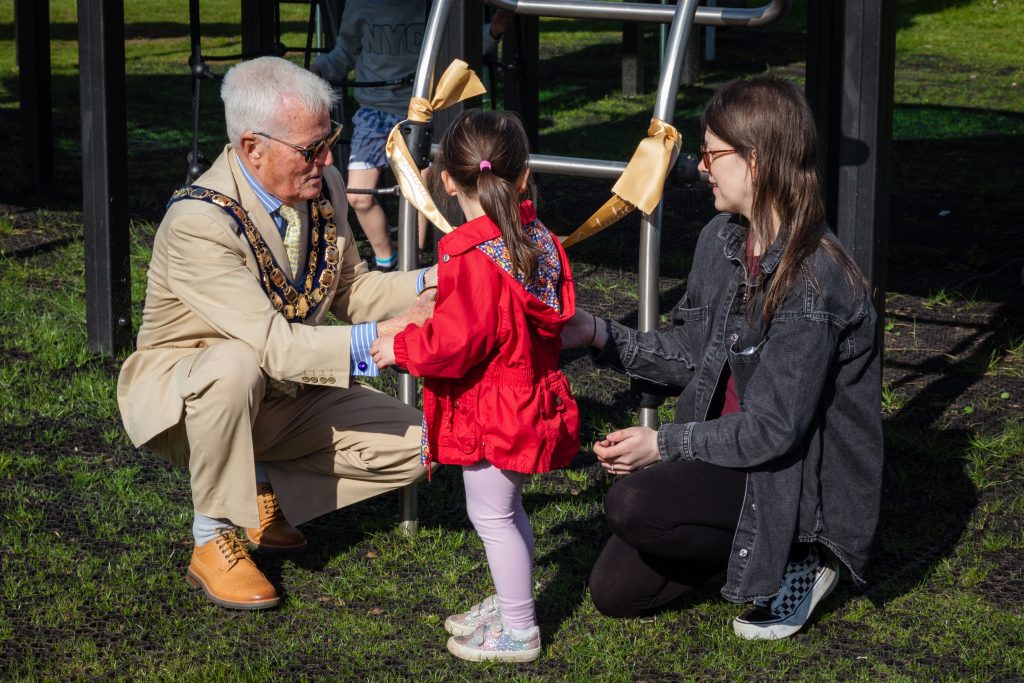
Councillors are a link between their communities and the Town Council. This means listening to residents, understanding local issues and bringing their views and concerns into Council discussions and decisions.
You may be approached by residents about a wide range of issues. Some may be matters the Town Council can deal with directly, while others may be the responsibility of another organisation. A Councillor can help by listening, providing information and signposting residents to the organisation that can help.
Being a good local representative means getting to know your ward, building relationships with local organisations and community groups, and encouraging people to share their views.
The Town Council believes that local people should have opportunities to influence the decisions that affect their town.
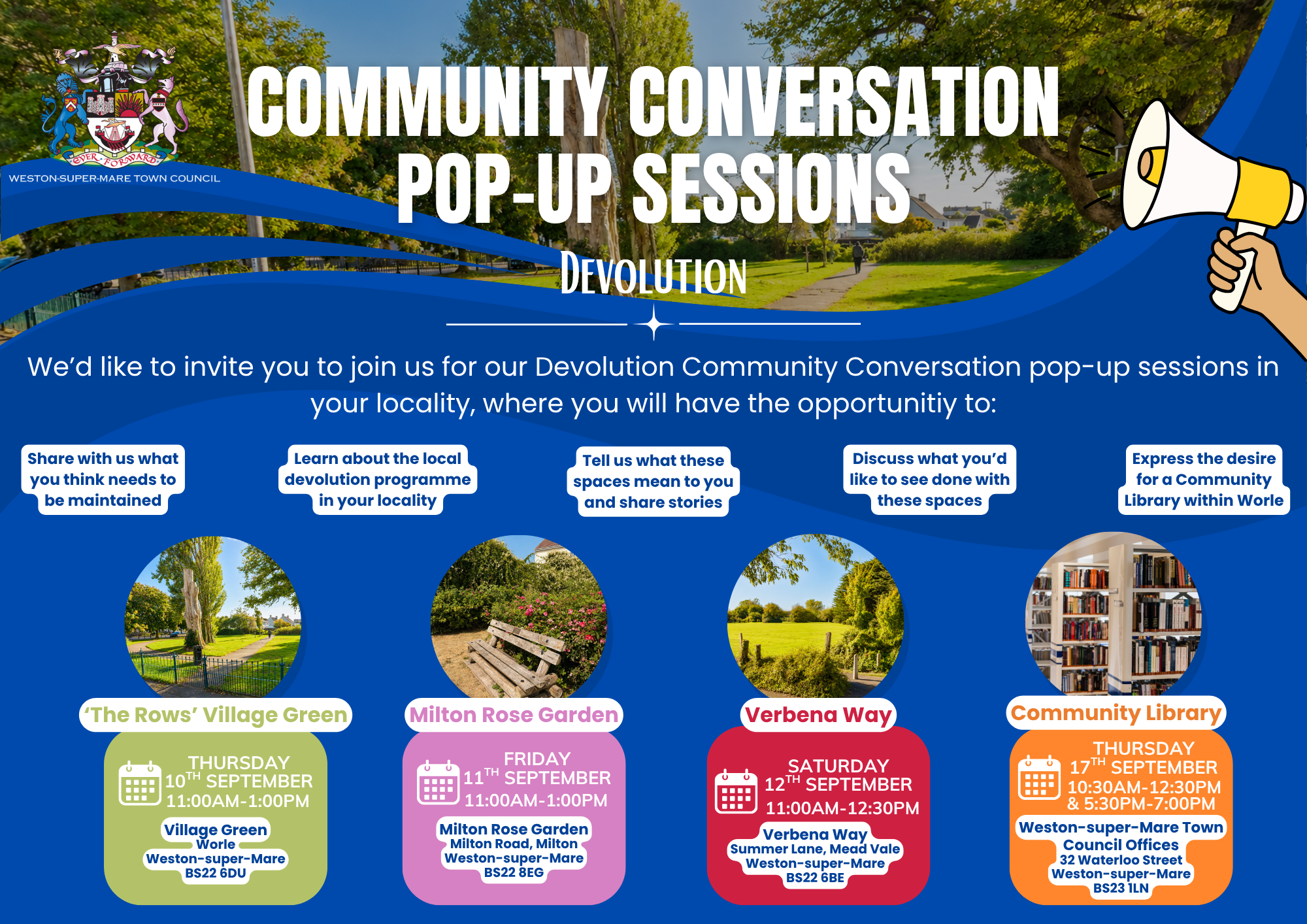
Councillors therefore have an important role in encouraging public participation and making sure residents know how they can get involved.
The Town Council provides a public speaking session before its Town Council and committee meetings, giving members of the public an opportunity to raise matters with Councillors.
As a Councillor, you can help create those connections by listening to different perspectives, encouraging people to engage with the Council and bringing local knowledge and experience into discussions.
You will not always agree with every view you hear, and Councillors will sometimes have to make difficult decisions. The role is to listen respectfully, consider the information available and take part in the democratic decision-making process.
A Town Councillor does not work alone
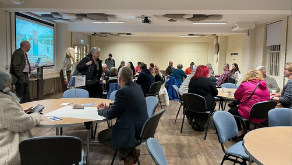
Improving Weston-super-Mare involves working with a wide range of people and organisations, including residents, voluntary and community groups, businesses, schools, public services, North Somerset Council, the police and other partners.
Councillors may attend meetings or events with local organisations, meet community groups, speak with residents or work alongside partners on issues affecting their ward or the wider town.
Building positive relationships and understanding what others are doing can help the Town Council work more effectively and identify opportunities to work together.
Being a Town Councillor is a public role and comes with responsibilities.
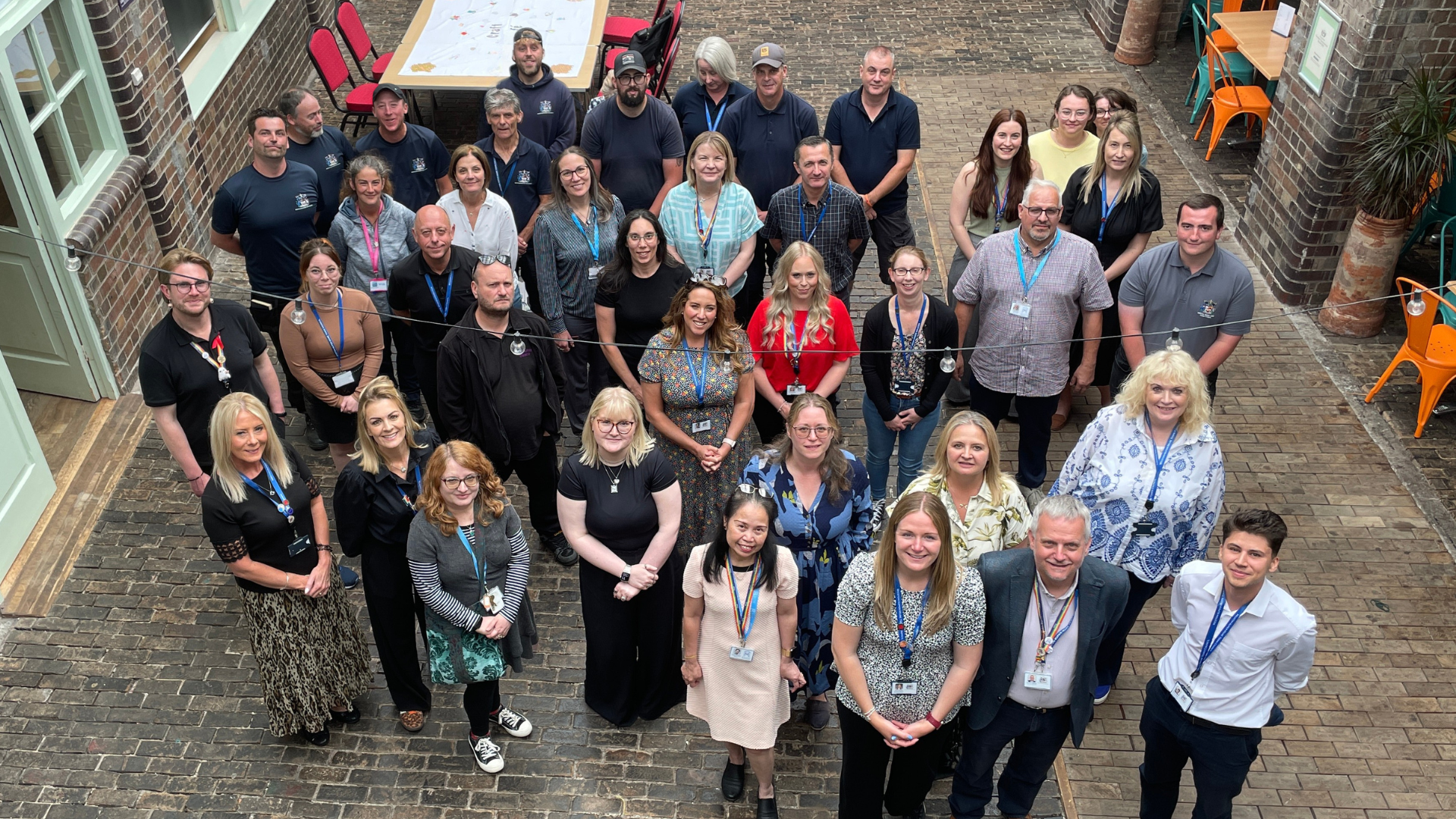
Councillors are expected to act in accordance with the Council’s Code of Conduct and the principles of good governance and public life. The Town Council is committed to conducting its business with integrity, impartiality and transparency.
Councillors must also take responsibility for the decisions they make and understand that Council money and resources must be managed responsibly.
The Town Council is committed to being a listening and caring Council that treats people’s views with courtesy and respect. Councillors have an important part to play in creating that culture.
Every Councillor has a role
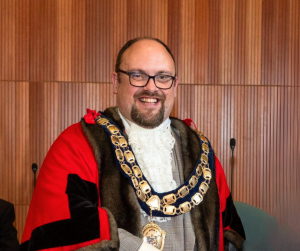
Councillors make decisions collectively on behalf of the Town Council. Councillors attend Town Council and committee meetings where they discuss reports, consider proposals, ask questions and make decisions.
Every Councillor has a role in the work of the Town Council, although individual Councillors may also serve on particular committees, working groups or outside bodies.
This can include decisions about:
- Council services and facilities
- Parks, open spaces and community assets
- Events and activities
- Grants and support for community organisations
- Projects and initiatives for local communities
- Council policies and strategies
- How Council resources and budgets are used
- The future priorities of the Town Council
“The way Councillors carry out their role matters just as much as the decisions they make“
“You may not be able to solve every issue raised by residents and not every decision will be within the Town Council’s responsibility. But by listening to your community, understanding local priorities and working constructively with others, you can play an important part in helping Weston-super-Mare move forward”
Attend one of our “Becoming a Councillor” sessions:
Insert Title
Insert Info
Insert Title
Insert Info
Your Voice, Your Vote
Your Voice, Your Vote
The next local elections will take place on Thursday 6th May 2027.
The elections are an opportunity for residents to have their say about who represents their local community. Want to take part in the 2027 elections? Find out everything you need to know about voting below:
North Somerset Council is responsible for administering elections in North Somerset.
North Somerset Council carries out these responsibilities through its Electoral Services team and the Returning Officer.
This includes making the practical arrangements needed to run the election fairly, securely and in accordance with electoral law.
North Somerset Council is responsible for:
- Managing the nomination process for candidates
- Publishing official election notices and candidate information
- Arranging polling stations and appointing polling station staff
- Managing postal and proxy voting
- Producing and issuing ballot papers
- Administering the poll on election day
- Verifying and counting the votes
- Declaring the election results
The Council’s Returning Officer has a statutory responsibility for the conduct of the election and must remain impartial throughout the process.
The Electoral Commission provides guidance and sets standards for the administration of elections, but it does not run the polling stations or count the votes. These responsibilities sit with the relevant Returning Officer.
Find out more about elections in North Somerset → Voting and elections | North Somerset Council
You must be registered to vote before you can take part in an election.
You can register online through GOV.UK. You will usually need your National Insurance number, date of birth and address.
If you have recently moved home, turned 18 or are unsure whether you are registered, check your registration details and register if necessary.
Click here → Register to vote – GOV.UK
If you vote in person at a polling station in England, you will need to show an accepted form of photographic identification before you can be given your ballot paper. The photo ID you show must be the original version. You cannot use a photograph, image on a phone or a photocopy of your ID.
Accepted forms of ID include passports, driving licences, Blue Badges, certain concessionary travel passes and a Voter Authority Certificate.
Your ID can be expired, provided the photograph is still a good likeness of you.
If you do not have an accepted form of photographic ID, you can apply for a free Voter Authority Certificate.
Check which forms of ID are accepted →
How to vote: Photo ID you’ll need – GOV.UK
Apply for a Voter Authority Certificate →
Apply for photo ID to vote (called a ‘Voter Authority Certificate’) – GOV.UK
You do not need to show photo ID if you are voting by post.
The next scheduled local elections will take place on:
Thursday 6 May 2027
Polling stations are expected to be open from 7am to 10pm on polling day.
Your poll card will provide information about your voting arrangements and, if you are voting in person, where you need to go.
You do not need to take your poll card with you to vote at a polling station.
If you are voting in person, you will need to go to the polling station allocated to you.
Your polling station may not be the same place you have voted at previously, so make sure you check the information on your poll card before polling day.
Information about polling stations will be published by North Somerset Council ahead of the election.
Find your polling station →
(Insert Link when known and published by NSC)
Voting at a polling station is straightforward.
1. Take your photo ID
You will need to show an accepted form of photographic identification to the polling station staff.
2. Give your name and address
The polling station staff will check that you are registered to vote there.
3. Receive your ballot paper
Once your details have been checked, you will be given your ballot paper.
4. Go to the polling booth
Take your ballot paper into a private polling booth and follow the instructions printed on the ballot paper.
5. Cast your vote
Mark your ballot paper as instructed and place it in the ballot box.
If you need help or have a question, speak to a member of the polling station staff. Assistance is available for voters who need support.
More information about accessibility at polling stations →
Voting if you have a disability
If you have a disability, your electoral registration office can tell you about:
- physical access, for example wheelchair ramps and disabled parking spaces
- low-level polling booths
- any specific equipment you need
Every polling station must provide at least one large print display version of the ballot paper.
If you would prefer not to vote in person, you can apply to vote by post.
You must be registered to vote before applying for a postal vote. You will need to provide information to verify your identity when making your application.
You can apply for a postal vote for:
- A particular election
- A specific period
- A longer-term arrangement
Postal votes are now subject to a maximum three-year period, after which you will need to apply again.
Apply to vote by post →
If you are unable to vote yourself, you may be able to appoint someone you trust to vote on your behalf. This is known as a proxy vote.
You and your appointed proxy must meet the relevant eligibility requirements and be registered to vote.
Your proxy will normally vote at your polling station on your behalf. In some circumstances, a postal proxy vote may be available.
You should ask the person you want to appoint to be your proxy before making your application.
Apply for a proxy vote →
How to vote: Voting by proxy – GOV.UK
There are limits on the number of people someone can act as a proxy for, so check the current guidance before applying.